3 April, 2025

Determining liability in a personal injury claim depends on legal concepts like strict liability vs. negligence. Most personal injury cases are based on negligence, requiring proof that someone failed to exercise reasonable care, but strict liability law applies in specific circumstances where liability is imposed regardless of fault. Strict liability law is a legal doctrine holding parties responsible for damages or injuries, regardless of intent, negligence, or fault. Understanding how these principles apply can clarify what must be proven to seek compensation. Our team of experienced attorneys at can help injury victims navigate these complexities and explore their legal options to protect their rights.
Negligence occurs when someone fails to take reasonable care, causing harm. It is a key element in personal injury cases and helps determine responsibility. This concept establishes when an individual or entity may be liable for damage. Negligence cases require proof that the responsible party did not act with expected care, leading to injury.
In contrast, strict liability situations do not require the injured party to prove negligence or fault. In strict liability claims, the injured party does not need to prove that the defendant acted negligently to recover compensation.
To establish a negligence claim, four key elements must be proven:
Negligence can manifest in various scenarios, including:
A driver running a red light and causing a collision. If the driver was speeding, texting, or driving under the influence, they may be considered negligent.
A healthcare provider fails to diagnose a treatable condition. If a doctor misdiagnoses a condition or performs surgery incorrectly, they may be held responsible.
A property owner neglects to repair hazardous conditions, leading to slips and falls. Businesses and homeowners are responsible for ensuring their premises are safe for visitors.
An employer fails to provide adequate training or protective equipment, resulting in an injury. Workplace safety laws require employers to take reasonable steps to protect their employees.
Strict liability is a strict liability tort applied in specific cases, such as defective products, abnormally dangerous activities, and wild animal ownership. In strict liability cases, the court does not consider the defendant’s intent, negligence, or mental state; the focus is solely on whether the harmful act occurred. Defendants under strict liability cannot typically defend themselves by showing they took all reasonable precautions. Strict liability rules are applied by courts to certain activities considered abnormally dangerous, and courts do not consider the offender’s intent or mental state.
Strict liability is distinct from absolute liability. Absolute liability is even more stringent, as it removes defenses like due diligence and imposes liability solely based on the act itself, regardless of any precautions taken.
Strict liability can apply in both civil (tort law) and criminal law. In tort law, strict products liability holds manufacturers and others in the distribution chain liable for injuries caused by product defects. In product liability cases, a plaintiff must prove that a product defect existed and that the defect caused their injury (defect caused), regardless of the manufacturer’s intent. In criminal law, certain crimes, such as statutory rape or selling alcohol to minors, do not require proof of intent or the offender’s mental state to convict, establishing criminal liability without regard to intent.
Strict liability encourages companies to implement the highest possible safety standards to avoid payouts. Risk allocation in strict liability cases shifts the financial burden of injuries from the individual consumer to the entity that profits from the risky activity or product. Plaintiffs do not need extensive resources to prove that the defendant was careless under strict liability.
Strict liability commonly applies in personal injury lawsuits and situations such as:
Punitive damages may also be awarded in strict liability cases if the defendant’s conduct is particularly egregious or grossly negligent.
The distinction between strict liability vs. negligence is critical in personal injury cases, as it determines the legal strategy and the burden of proof required to recover compensation. Strict liability is applied in specific cases, such as those involving defective products or certain statutory offenses, where plaintiffs can recover damages without proving fault. In these situations, strict liability rules hold manufacturers or parties responsible for harm caused by their products or actions, regardless of intent or negligence. The court plays a key role in interpreting and applying strict liability rules, evaluating the evidence, and determining whether the legal standards for strict liability have been met.
Grasping the differences between strict liability and negligence enables you to:
The difference between strict liability and negligence can impact how liability is determined in a personal injury case. Knowing how these legal principles apply to your situation can help you pursue the compensation you deserve. Our team of experienced attorneys at The Barnes Firm are available to discuss your options. Call (800) 800-0000 today for a free consultation.
Written by The Barnes Firm, reviewed by Richard Barnes
Richard Barnes: “As President of The Barnes Firm, I have dedicated my career to achieving justice in hundreds of cases for the victims of injuries caused through the fault of others. Additionally, I have been honored to have been elected Best Lawyer and a Super Lawyer”
Years of Experience: 30+ years
LinkedIn Profile: Richard Barnes

Getting our clients the best results possible.
or call us at
(800) 800-0000

“I had an outstanding experience with The Barnes Firm, thanks to Nahuel Cruz and Aybike Donuk. Their professionalism, expertise, and dedication were evident through...
“Both Jeff Bodily and Mayra Wallis were wonderful to deal with. Very professional, knowledgeable, supportive and helped me navigate through a very stressful time af...
“My personal Injury Attorney was Jake Otis, he provided accurate timely advise and encouragement throughout the process. He is a true gentleman , his knowledge and ...
“I’ve had an exceptional experience with Mory Ahmadi, Esq. from the Barnes Firm. Mory’s professionalism, knowledge of personal injury law, and compassionate app...
“My personal injury lawyer was The Barnes Firm, they helped me with my injury lawsuit. I can’t thank them enough! John Sheehan and his team were there for me ever...
“I had a great experience working with Richard Amico and his team. They were responsive to my questions and got me a great settlement. They definitely were working ...

This page has been written, edited, and reviewed by a team of legal writers following our comprehensive editorial guidelines. This page was approved by attorney president Rich Barnes who has more than 30+ years of legal experience as a practicing personal injury trial attorney.
The Barnes Firm is here to help you. Our personal injury firm helps individuals and their families who
have suffered an injury in an accident.
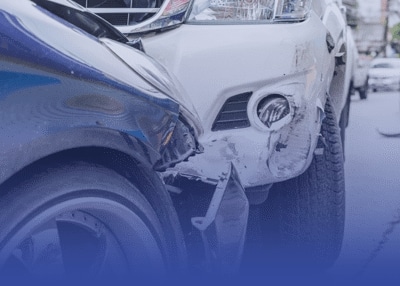
Whether your car crash was minor or serious, any injuries sustained in an accident can be painful and costly.
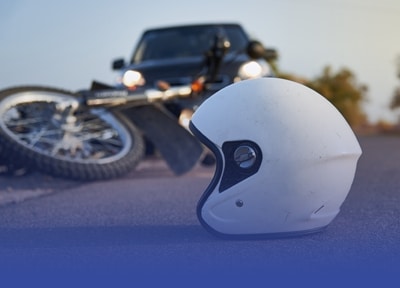
All motorcycle accidents are different, the compensation you receive will depend on the circumstances surrounding your accident.

A truck accident can be catastrophic, even in low-impact crashes, if you or your family are involved, you may be entitled to significant financial compensation.

There are dozens of accidents involving school buses each year, most commonly, involving children outside a school bus.
Explore Articles Related to Your Situation

E-scooters have become a popular way to get around busy cities, college campuses, neighborhoods...
read more
Being involved in a motor vehicle accident can be a stressful experience, especially if the neg...
read more
So, you've won a legal battle regarding a personal injury and are about to receive a settlement...
read more
Unlike many other types of attorneys, New York personal injury lawyers typically do not charge ...
read moreWe are always available to discuss your case. Give us a call at (800) 800-0000.
Fill out our form and we will contact you shortly to discuss your case
Our attorneys will come to your home, office or hospital at your convenience.
We are available anytime, including after hours and
weekends.
500 Pearl Street
Suite #700
Buffalo, NY 14202
Phone: (800) 800-0000
Fax: +1 (800) 853-5153
420 Lexington Avenue
Suite #2140
New York, NY 10170
Phone: (800) 800-0000
Fax: +1 (800) 853-5153
600 Old Country Road
Suite #425
Garden City, NY 11530
Phone: (800) 800-0000
Fax: +1 (800) 853-5153
28 East Main Street
Suite #600
Rochester, NY 14614
Phone: (800) 800-0000
Fax: +1 (800) 853-5153
451 Grider Street
Buffalo, NY 14215
Phone: (800) 800-0000
Fax: +1 (800) 853-5153
633 West 5th Street
Suite #1750
Los Angeles, CA 90071
Phone: (800) 800-0000
Fax: +1 (888) 800-7050
555 12th Street
Suite #1470
Oakland, CA 94607
Phone: (800) 800-0000
Fax: +1 (888) 800-7050
655 W. Broadway
Suite #940
San Diego, CA 92101
Phone: (800) 800-0000
Fax: +1 (888) 800-7050
