3 August, 2020

After a car accident, the insurance company may declare your car a total loss. This means that the damage to your vehicle is so significant that repairing it would not be economically reasonable compared to the vehicle’s value. Instead of paying for repairs, the insurance company may total the vehicle and offer payment based on the car’s appraised value before the crash.
A total loss car accident can create financial stress, especially if you still owe money on the vehicle or disagree with the insurance company’s valuation. Each state has it’s own standards for when a car is considered a total loss following an accident. In many cases, the decision is based on the cost of repairs, the vehicle’s actual cash value, and the salvage value of the damaged car.
A car is typically considered a total loss when the cost to repair the vehicle is too high compared to what the car was worth before the accident. This does not always mean the vehicle is impossible to fix. In many cases, it means the insurance company has decided that paying the value of the vehicle makes more financial sense than paying for repairs. After a total loss car accident, the insurance company usually evaluates the vehicle, estimates repair costs, reviews comparable vehicles, and determines the car’s actual value. If the vehicle is declared a total loss, the insurer may issue a settlement payment based on that value, minus any applicable deductible or loan payoff issue.
In California, insurers often use a Total Loss Formula, or TLF, when determining whether a car is a total loss after an accident. The Total Loss Formula considers the cost of repairs plus the salvage value of the vehicle and compares that amount to the vehicle’s actual cash value, or ACV, before the accident. If the cost of repairs plus the salvage value equals or exceeds the actual case value, the vehicle may be considered a total loss. For example, if your car’s ACV before the accident was $20,000, but it’s salvage value is $5,000, repair costs would generally need to reach or exceed $15,000 for the vehicle to be treated as a total loss .
Each state’s standards vary when it comes to establishing whether a car is a total loss. Some states use a specific percentage threshold, while others rely on a formula. Because these rules can affect your property damage claim, it is important to understand how the insurance company reached its decision.
There are multiple methods insurance companies may use to determine the value of your car at the time of the accident. The goal is to determine the actual cash value immediately before the crash. This value is not necessarily what you paid for the car or what you still owe on your loan. If your car had upgrades after you bought it, such as a stereo system, new tires, or engine work, provide receipts and documentation. These upgrades may affect your car’s value and should be considered when the insurer evaluates your total loss car accident claim.
NADA Blue Book, nor commonly associated with J.D. Power vehicle values, is one methos that may be used to estimate the replacement cost or market value of your car. It analyzes comparable vehicles that are similar in quality, make, model, mileage, and features to estimate what your vehicle was worth before the crash. You can also use this type of valuation tool to compare the insurance company’s offer with available market data. If the offer seems too low, comparable vehicle listings may help support a counteroffer.
Kelley Blue Book is another popular online tool used to estimate the fair market value of a vehicle. You input your car’s characteristics, including make, model, year, mileage, condition, and features, and the tool provides an estimated value range. While insurance companies may not rely exclusively on Kelley Blue Book, it can still help you understand whether the insurer’s total loss offer is reasonable.
The actual cash value of your car at the time of your accident considers several factors before the value is assigned. These may include:
One way to think of ACV is to compare it to the appraisal process for a home or piece of property. Appraisers look at comparable properties, condition, upgrades, and local market factors to determine value. A vehicle’s ACV works in a similar way by comparing your car to similar vehicles available in the area.
After a car accident, it can be helpful to do some research before accepting the insurance company’s offer for your vehicle. Review your car’s make, model, trim, mileage, condition, upgrades, and recent repairs. Then compare the insurance offer to similar vehicles for sale in your area. If the insurance company makes a fair offer, you may choose to accept it. You will typically receive a check that can be used toward purchasing another vehicle or paying off the remaining loan balance. However, if you do not agree with the insurance company’s offer, you may be able to make a counteroffer.
A counteroffer should be supported by evidence. This may include comparable vehicle listings, repair estimates, receipts for upgrades, maintenance records, photos of your car before the accident, and documentation showing the condition of the vehicle. If the insurance company refuses to adjust its offer, you may have additional legal options.
A total loss car accident can be especially frustrating if you still owe money on your vehicle. Insurance usually pays based on actual cash value, not the amount remaining on your loan. If your loan balance is higher than the car’s value, you may still owe money after the total loss payment. Gap insurance may help cover the difference between your loan balance and the insurance payout if you purchased that coverage. Without gap insurance, you could be responsible for the remaining loan amount even though the car is no longer drivable. Before accepting a settlement, review your loan balance, insurance coverage, deductible, and any gap coverage that may apply.
If your vehicle was declared a total loss after a car accident, there is a good chance you may have suffered injuries as well. While insurance companies typically handle vehicle valuation and property damage claims, an experienced car accident attorney can help you understand your legal rights if you were injured because of another driver’s negligence. After a serious crash, you may be entitled to compensation for injury-related damages, including medical expenses, lost wages, pain and suffering, rehabilitation cots, and future medical care. An attorney can investigate the accident, gather evidence, work with medical experts, and build a strong claim on your behalf.
Many times, having a car accident lawyer representing you can help ensure the insurance company takes your injury claim seriously. An attorney can communicate with insurers, negotiate for fair compensation, and help protect you from accepting a settlement that does not fully account for your injuries and losses.
Getting proper value for your car accident after an accident can be stressful, especially when you are also dealing with injuries, missed work, and insurance paperwork. The Barnes Firm can help after a total loss car accident by reviewing your case, investigating the crash, and helping you pursue fair compensation. Our car accident attorneys have experience helping injured clients after serious crashes. We can evaluate your potential injury claim, explain your legal options, and help you pursue compensation for injuries caused by another driver’s negligence.
For a free consultation with The Barnes Firm, complete our online contact form or call our office today at (800) 800-0000.
Written by The Barnes Firm, reviewed by Richard Barnes
Richard Barnes: “As President of The Barnes Firm, I have dedicated my career to achieving justice in hundreds of cases for the victims of injuries caused through the fault of others. Additionally, I have been honored to have been elected Best Lawyer and a Super Lawyer”
Years of Experience: 30+ years
LinkedIn Profile: Richard Barnes

Getting our clients the best results possible.
or call us at
(800) 800-0000

“I had an outstanding experience with The Barnes Firm, thanks to Nahuel Cruz and Aybike Donuk. Their professionalism, expertise, and dedication were evident through...
“Both Jeff Bodily and Mayra Wallis were wonderful to deal with. Very professional, knowledgeable, supportive and helped me navigate through a very stressful time af...
“My personal Injury Attorney was Jake Otis, he provided accurate timely advise and encouragement throughout the process. He is a true gentleman , his knowledge and ...
“I’ve had an exceptional experience with Mory Ahmadi, Esq. from the Barnes Firm. Mory’s professionalism, knowledge of personal injury law, and compassionate app...
“My personal injury lawyer was The Barnes Firm, they helped me with my injury lawsuit. I can’t thank them enough! John Sheehan and his team were there for me ever...
“I had a great experience working with Richard Amico and his team. They were responsive to my questions and got me a great settlement. They definitely were working ...

This page has been written, edited, and reviewed by a team of legal writers following our comprehensive editorial guidelines. This page was approved by attorney president Rich Barnes who has more than 30+ years of legal experience as a practicing personal injury trial attorney.
The Barnes Firm is here to help you. Our personal injury firm helps individuals and their families who
have suffered an injury in an accident.
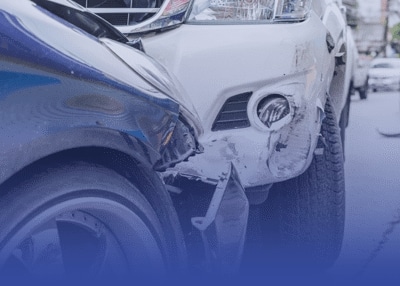
Whether your car crash was minor or serious, any injuries sustained in an accident can be painful and costly.

All motorcycle accidents are different, the compensation you receive will depend on the circumstances surrounding your accident.

A truck accident can be catastrophic, even in low-impact crashes, if you or your family are involved, you may be entitled to significant financial compensation.

There are dozens of accidents involving school buses each year, most commonly, involving children outside a school bus.
Explore Articles Related to Your Situation

Driving while drowsy, or tired, can be as dangerous as driving under the influence of drugs or ...
read more
A frequent question we receive from clients after they’ve been injured in a crash is: “How ...
read more
Hematomas are one of many serious injuries that you can sustain in a car accident. They are ide...
read more
If you’ve ever known someone who was in a car accident, chances are you’ve heard them dis...
read moreWe are always available to discuss your case. Give us a call at (800) 800-0000.
Fill out our form and we will contact you shortly to discuss your case
Our attorneys will come to your home, office or hospital at your convenience.
We are available anytime, including after hours and
weekends.
500 Pearl Street
Suite #700
Buffalo, NY 14202
Phone: (800) 800-0000
Fax: +1 (800) 853-5153
420 Lexington Avenue
Suite #2140
New York, NY 10170
Phone: (800) 800-0000
Fax: +1 (800) 853-5153
600 Old Country Road
Suite #425
Garden City, NY 11530
Phone: (800) 800-0000
Fax: +1 (800) 853-5153
28 East Main Street
Suite #600
Rochester, NY 14614
Phone: (800) 800-0000
Fax: +1 (800) 853-5153
451 Grider Street
Buffalo, NY 14215
Phone: (800) 800-0000
Fax: +1 (800) 853-5153
633 West 5th Street
Suite #1750
Los Angeles, CA 90071
Phone: (800) 800-0000
Fax: +1 (888) 800-7050
555 12th Street
Suite #1470
Oakland, CA 94607
Phone: (800) 800-0000
Fax: +1 (888) 800-7050
655 W. Broadway
Suite #940
San Diego, CA 92101
Phone: (800) 800-0000
Fax: +1 (888) 800-7050
